How wood ages outdoors
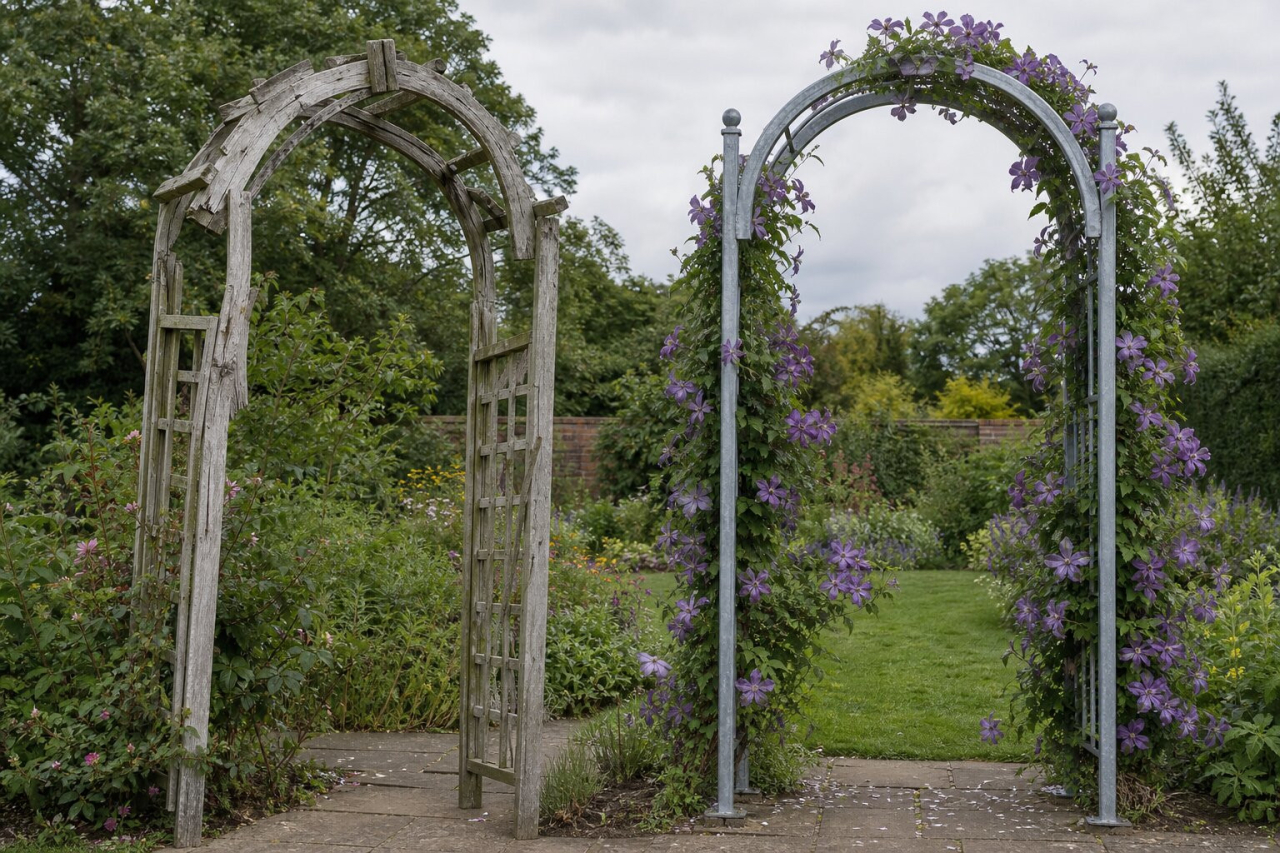
Even pressure-treated softwood is, in essence, a slow-burning material. It absorbs moisture, swells, dries and cracks with every season, and the joints take the worst of it. The rotation point at ground level is almost always the first to fail — capillary water sits there, frost works its way in, and within five to eight years many timber arches need replacing or significant repair. Hardwoods such as oak last longer but cost considerably more, and even they twist as they dry. The aesthetic is undeniably warm, but the maintenance bill is real: regular oiling, replacement of broken slats, occasional re-anchoring as the timber pulls away from the soil.
Why steel earns its keep
A properly built metal arch operates on a different timescale altogether. Frames made from solid iron and flat iron, finished as rust-look, black powder-coated or hot-dip galvanised steel, are designed for long-term outdoor performance. There is no rotting at the base, no swelling at the joints and no annual sanding. The classic premium metal garden arches from European manufacturers such as Garden Arches are built around traditional metalworking techniques and specifically engineered to carry the load of mature climbing roses, clematis or wisteria without distortion.
The real cost over fifteen years
On day one, a timber arch usually looks cheaper. Spread the calculation over a realistic lifespan and the picture inverts quickly. A wooden frame replaced once or twice across fifteen years, plus annual treatment products, frequently overtakes the upfront price of a heavy-duty steel arch — and that is before counting the disruption of digging out roots and re-staking mature plants. A galvanised or powder-coated arch typically requires zero structural maintenance beyond an occasional check of its ground anchors.
Which material suits which garden
Wood remains a reasonable choice for short-term projects, rental gardens or a deliberately rustic look that the owner intends to refresh. Steel is the rational pick whenever you want architecture rather than decoration — a permanent line in the garden that climbing plants can grow into and lean on for decades. For most British gardens, where wet winters and salty coastal air punish exposed timber, modern handcrafted steel arches offer a more honest long-term answer.